
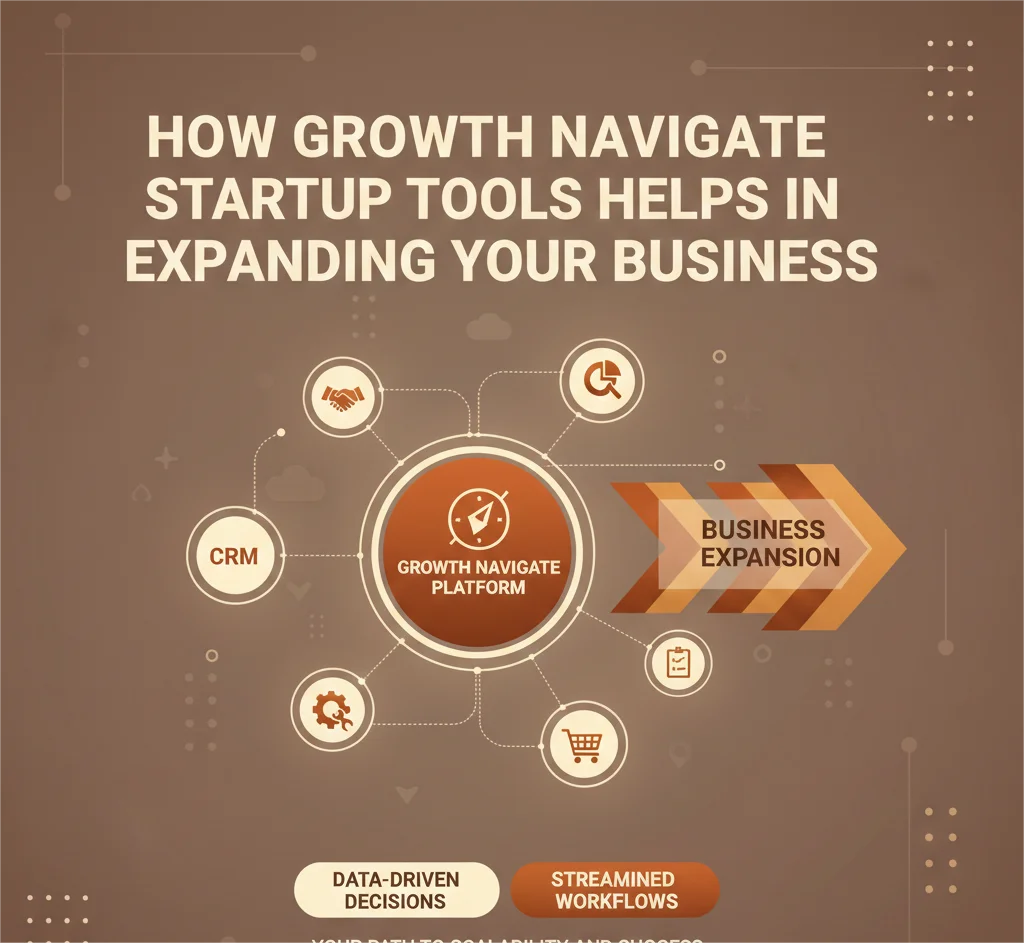
Growth navigate startup tools are the platforms early teams use to win customers, run projects and read their own numbers. Most founders end up holding too many. A stack that works stays small, connects end to end and grows only when a real problem forces it. Here is how to choose by job, by stage and by cost.
What Growth Navigate Startup Tools Actually Do
These are the digital systems behind a startup’s daily work. They replace spreadsheets, manual tracking and scattered email with platforms that collect live data and hand off repeat tasks.
The constraint is headcount. Four people cover work that whole departments handle at a larger company. Software closes part of that gap.
Industry figures for 2025 put cloud-based setups at 78% of startup software rollouts, as founders move off local files and manual logs.
Six Jobs Your Startup Tool Stack Must Cover
Name the job before you shop for the product. Every early company runs the same six.
| Job | What it handles |
|---|---|
| CRM | Keeps leads, deals and customer conversations in one record |
| Projects and teamwork | Sorts who does what and pulls discussion out of inboxes |
| Analytics | Turns raw activity into user behaviour you can act on |
| Marketing automation | Runs campaigns, email and follow-ups without manual sends |
| Workflow automation | Passes data between your other apps by itself |
| Finance | Tracks cash, burn and runway |
Best Growth Navigate Startup Tools By Category
These platforms are widely used and tested. Match the job first, then pick one option per job.
| Category | Options |
|---|---|
| CRM and sales | HubSpot, for keeping sales and marketing on one record, with a large free tier. Salesforce Starter Suite suits heavy B2B scaling |
| Team communication | Slack, which sorts conversation into channels and connects to almost everything else |
| Projects and docs | Notion for notes, wikis and databases. Asana and ClickUp for task tracking. Airtable for a database that behaves like a spreadsheet |
| Visual planning | Miro, an endless whiteboard for wireframes and sprint work |
| Analytics | Google Analytics 4 for site and traffic data. Amplitude for product use and retention |
| Automation | Zapier, the default for joining apps without code |
Remote teams add one line item nobody plans for. Video standups fall apart on a weak connection, so compare home internet packages built for heavy upload before blaming the software.
Numbers Your Startup Software Should Report Weekly
A tool earns its cost when it measures something that keeps the company alive.
| Metric | Meaning |
|---|---|
| CAC | What you pay to land one customer |
| LTV | What that customer is worth across the full relationship |
| Burn rate | How fast cash leaves each month |
| Runway | Months of operation left at current burn |
| MRR | Repeating monthly revenue for subscription businesses |
LTV needs to sit above CAC. Teams selling through social channels should pair that with reach data, and audience stat breakdowns by platform show where attention already sits.
Choosing Growth Navigate Startup Tools By Stage
Most guides skip this part. Order matters more than brand.
Before product-market fit, stay thin. Notion and Slack usually cover it. Buying heavy software this early stalls more teams than it helps.
Once customers arrive, add a CRM and GA4. Data starts steering decisions at that point instead of instinct.
At repeatable revenue, add marketing automation, product analytics and Zapier. Finance tools stop being optional, because burn and runway need weekly eyes.
Mistakes That Drain A Startup Software Budget
Automating before product-market fit is the expensive one. You should be talking to users, not wiring up systems for a product nobody has bought yet.
Overlap comes next. Three apps that half-cover projects cost more than one that covers them fully. Integration gaps rank close behind, since tools that cannot share data create duplicate work.
Unfamiliar platforms deserve a look first, and a quick safety check on a lesser-known site costs less than a data cleanup. A common benchmark puts software spend at 10% to 20% of an early team’s operating budget.
Audit subscriptions each quarter. Anything the team outgrew months ago is pure leakage.
How To Build Your Startup Tool Stack Step By Step
- Write down your sharpest problems, not the apps you like. Leads going cold. Tasks disappearing.
- Check what your existing account logins already unlock before paying for a second tool.
- Tie each problem to one of the six jobs.
- Pick one product per job and start on a free or cheap tier.
- Connect them through Zapier or native integrations so data moves without copy and paste.
- Review each tool against a number it should have moved. Keep the winners, cancel the rest.
Pricing changes fast, and daily tech news roundups catch shifts before your renewal date does. The same habit applies to hardware, where gadget comparisons save a support ticket later.
The winners are not the founders with the most apps. They match one tool to one real problem, add in step with their stage, and cut what stopped earning.
FAQs
What are growth navigate startup tools?
They are software platforms early-stage companies use for CRM, projects, analytics, marketing automation, workflow automation and accounting. The aim is a connected, low-cost set that removes friction as the company grows.
Which startup tools should I start with?
Start with two. A workspace such as Notion for documents and planning, plus Slack for team communication. Add a CRM like HubSpot and Google Analytics 4 once paying customers appear.
How many tools does a startup need?
Fewer than most founders expect. Strong stacks run roughly one product per core job, around two at idea stage and seven at growth stage. Overlapping tools add cost and confusion.
Are free tiers enough for early-stage startups?
Yes, for early testing. HubSpot, Notion, Slack and GA4 all offer free tiers that cover pre-revenue work. Upgrade when you hit hard usage limits or need advanced reporting.
How much should a startup spend on software?
Around 10% to 20% of an early team’s operating budget is a common benchmark. Spending above that range signals overlapping subscriptions or tools bought ahead of real need.

Bryan is a passionate gaming writer who covers everything from the latest releases to in-depth strategy guides and industry trends. With a sharp eye for detail and a love for immersive gameplay, he creates content that helps players get more out of every game—whether they’re casual gamers or hardcore enthusiasts.