

The sight of plastic cards hanging on retail racks was supposed to be a relic of the past by now. As consoles moved toward disc-less editions and high-speed internet made day-one patches the norm, the physical footprint of gaming began to shrink.
Yet, walk into any convenience store or browse a digital marketplace, and the prevalence of prepaid credit remains unchanged.
This persistence is not just about nostalgia. While the delivery of games has moved to the cloud, the financial infrastructure supporting those games has struggled to keep pace with how people actually want to manage their money.
The shift to digital storefronts and consolidated power
The gaming industry has undergone a massive transition over the last decade. In the early 2000s, buying a game meant a physical trip to a store. Today, the PlayStation Store, Xbox Games Store, and Steam serve as the primary gateways for most players. According to recent industry reports, digital sales now account for roughly 90% of the market share in some regions.
This shift has eliminated the risk of stores running out of stock, but it has also handed unprecedented control to platform holders. When a storefront is centralized, the consumer loses the leverage of the “used game” market or the ability to shop around at different retailers for a better price.
We have already seen the consequences of this total control; the closure of the 3DS and Wii U eShops effectively erased a generation’s worth of digital-only titles from legal purchase. This centralization makes the method of payment a critical point of friction, as users are locked into whatever financial terms the platform dictates.
The role of platform-specific credit
For users of PlayStation, Xbox, Nintendo, and Steam, gift cards act as a buffer. In a landscape where digital storefronts are closed systems, these cards provide a way to load a specific balance without tying a primary bank account to a console.
For many, this is a matter of budgeting. Adding a fixed amount of credit to a Steam wallet—or managing funds via the Steam Community Market—prevents the “invisible spending” that happens when a credit card is saved on file. It forces a pause between the impulse to buy a new release and the actual transaction.
This manual step serves as a tool for financial discipline in an era of one-click purchases and aggressive microtransactions.
Security and payment card alternatives
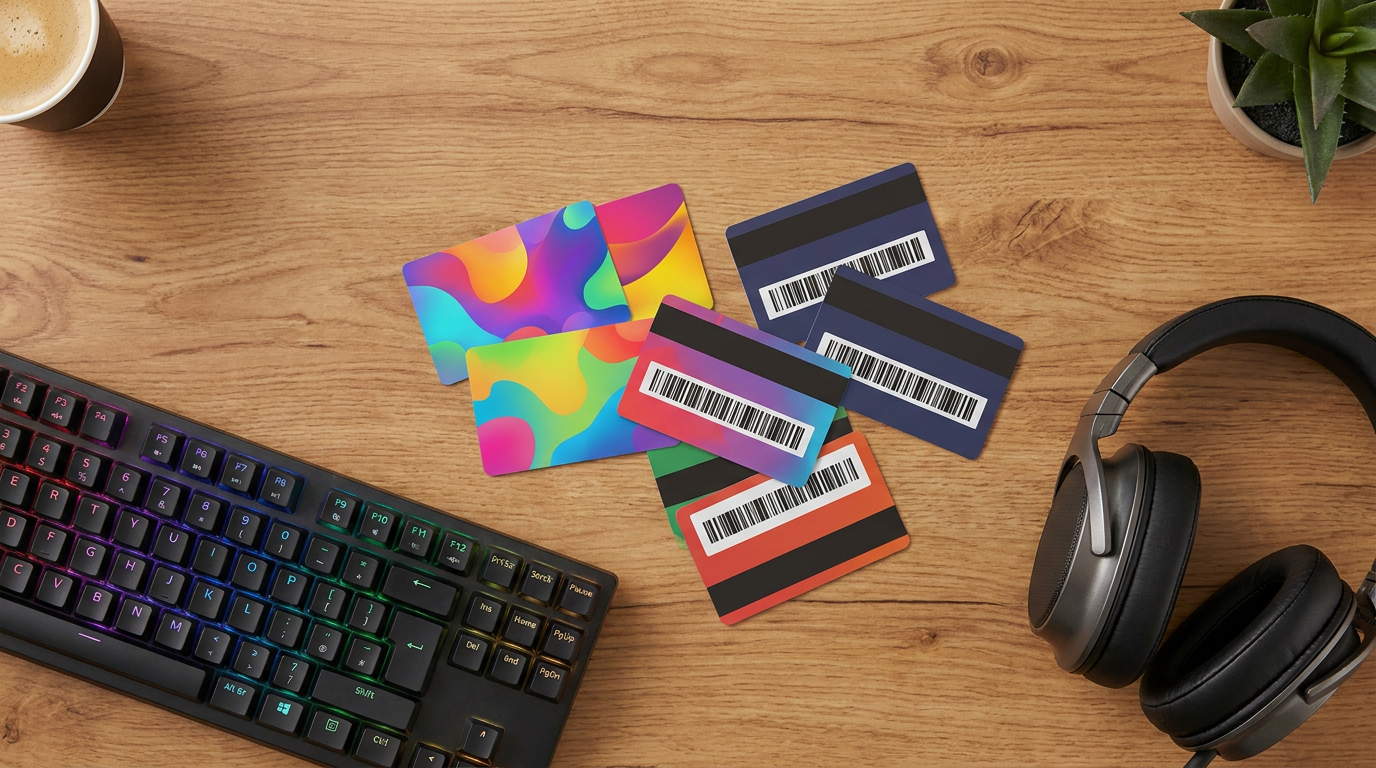
Storing credit card information on a gaming console or a PC client is a calculated risk. High-profile data breaches in the past have shown that even major tech companies are not immune to attacks. By using gift cards, gamers can interact with digital stores without exposing their primary financial details to potential server-side vulnerabilities.
Beyond security, there is the issue of accessibility for younger players. Most teenagers do not have access to a credit card, yet they are the primary demographic for titles like Fortnite or Roblox. Gift cards serve as the bridge between cash-in-hand and the digital currency required to participate in these online communities.
Navigating regional restrictions and currency barriers
Digital stores are often partitioned by geography. A user living in a country with a volatile currency or a limited banking sector might find their local debit card rejected by an international storefront. Furthermore, some titles are only available in specific regions due to licensing agreements or local regulations.
Gamers often navigate these hurdles by creating accounts localized to other regions. In these scenarios, a standard bank card from their home country will not work. Digital vouchers become the only viable currency.
By sourcing credit that matches the store’s region, players can access software that would otherwise be geoblocked, effectively bypassing the limitations of their local financial institutions.
| Payment Method | Privacy Level | Budget Control | International Use |
|---|---|---|---|
| Credit Card | Low | Low | Limited |
| PayPal | Medium | Medium | Moderate |
| Gift Card | High | High | High (via regional codes) |
The gifting dilemma in a digital age
Gifting a physical game used to be simple. Today, buying a digital game for someone else is surprisingly complicated. Steam has a built-in gifting system, but it requires the sender to be “friends” with the recipient for a set period. On consoles, you often cannot buy a specific game for a friend if they live in a different country due to price disparities.
A gift card solves this by transferring the choice to the recipient. Instead of guessing which title a friend wants—or whether their hardware can even run it—a voucher provides the flexibility to wait for a sale or put the balance toward a subscription service like Game Pass.
It remains the most efficient way to transfer value within the gaming ecosystem without running into compatibility or regional errors.
Emerging payment methods and financial privacy

As the industry moves away from traditional banking, a new segment of the market has emerged consisting of users who prioritize financial privacy or alternative assets. While major platforms have moved toward “frictionless” payments, a growing number of users prefer to decouple their gaming life from their primary bank accounts entirely.
This includes the rising trend of using decentralized assets to fund digital entertainment.
To bridge the gap between blockchain and traditional storefronts, third-party marketplaces facilitate the exchange of digital assets for store credit. For those looking for a way to buy Steam gift card with crypto, platforms like CoinsBee act as an intermediary.
This process allows holders of digital assets to convert their holdings into usable gaming credit instantly. It circumvents the need to first transfer assets to a centralized exchange, sell for fiat currency, and withdraw to a bank—a process that can take days and incur multiple sets of fees.
The future of gaming payments
Payment technology is evolving toward faster, invisible transactions. We are seeing the rise of biometrics and “buy now, pay later” schemes integrated directly into user interfaces. However, these advancements often require more data sharing and more permanent links to banking systems, further consolidating the power of the platform holders.
Gift cards are likely to remain relevant because they offer the opposite: anonymity, fixed limits, and portability. As long as there are regional price differences, security concerns, and diverse ways of holding wealth, the need for a decoupled, prepaid payment method will exist.
The physical card might eventually vanish, but the digital voucher is now a fundamental pillar of the gaming economy.
