

Empty your pockets and your bag, and count everything with a battery. A phone, almost certainly. Earbuds, probably. Maybe a smartwatch, a power bank or a car key fob. For most of us, it’s more than we’d guess, and the number keeps creeping up.
We pulled together the latest data on how many devices people own, which ones they carry and what happens to them once they’re no longer needed. Here’s what the numbers say.
Key statistics at a glance
- The average US household has 21 connected devices, down from a peak of 25 in 2021 (Deloitte).
- 91% of US adults own a smartphone, up from 35% in 2011 (Pew Research Center).
- 611.5 million wearable devices shipped worldwide in 2025, up 9.1% on the year before (IDC).
- The price of lithium-ion cells has fallen by about 97% since 1991 (MIT research).
- The average UK home holds around 30 unused electrical items (Material Focus).
How many connected devices does the average household own?
According to Deloitte’s Connected Consumer survey, the average US household has 21 connected devices across 13 different device types. That’s actually down from a peak of 25 in 2021, when people stocked up on tech during the pandemic.
Age makes a big difference. Adults aged 18 to 40 live in households with 26 devices on average, compared with 18 for older generations. And managing it all isn’t always fun: 28% of people told Deloitte they feel overwhelmed by the number of devices and subscriptions they have to keep track of.
Which rechargeable devices do people carry most often?
The smartphone is still the anchor of everyday carry. Pew Research Center found that 91% of US adults own one, compared with just 35% when it first asked the question in 2011.
Around the phone, though, the pocket is getting crowded. Here’s how the most common carry-around devices stack up:
| Device | Key statistic | Source |
|---|---|---|
| Smartphones | 91% of US adults own one (2025) | Pew Research Center |
| All wearables | 611.5 million units shipped worldwide in 2025, up 9.1% | IDC |
| Wireless earbuds and other earwear | The largest wearable category; shipments grew 7.8% in 2025 | IDC |
| Smartwatches | Back to solid growth in 2025, led by Apple and Huawei | IDC |
| Unused electricals at home | Around 30 per UK household, up from 20 four years earlier | Material Focus |
Earbuds are the quiet winner here. They’re cheap enough to replace often, small enough to forget about, and they come with their own rechargeable case, which means two batteries for one device.
Why are we carrying more batteries than ever?
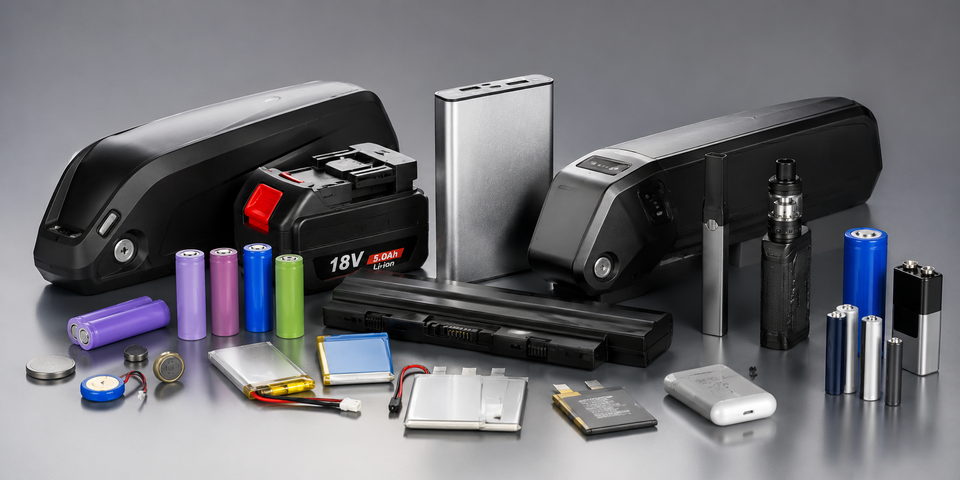
Mostly because batteries got cheap and small. Research by Micah Ziegler and Jessika Trancik at MIT found that the price of lithium-ion cells, measured per unit of energy, has dropped by about 97% since they first went on sale in 1991.
They’ve also become far more compact. In 1991, a liter of lithium-ion battery stored about 200 watt-hours of energy. Today the figure is over 700. That jump is what makes it possible to put a battery into almost anything that fits in a pocket.
Did you know?
The first commercial lithium-ion battery was released by Sony and Asahi Kasei in 1991. Back then, only a tiny amount of lithium-ion capacity existed worldwide. Today, it powers everything from earbuds to electric cars.
What kinds of small rechargeable devices are on the rise?
One clear trend is the single-purpose gadget: a small device that does one job well, charges over USB-C and often pairs with a phone app. Think smart rings, item trackers, e-readers, electric toothbrushes and portable speakers.
Heated tobacco devices belong in this group too. They’re battery-powered, pocket-sized and built around repeated short heating sessions. The PLOOM AURA from Ploom is a typical example: a full charge covers about 20 heating sessions, it charges over USB-C, and the PLOOM app shows the battery level, like many other connected gadgets.
Most of these devices share the same habits. They’re charged every night or every few days, they rely on lithium-ion cells and, sooner or later, they join the pile of electronics we no longer use.
What happens to rechargeable devices when we stop using them?
Often, nothing at all. Research from Material Focus found that UK households are holding on to 880 million unused electrical items. That works out at about 30 per home, up from 20 four years earlier.
Old phones, tangled cables and earbuds with one working side are some of the usual suspects. Each of them contains valuable materials, including copper and lithium, that can be recovered through recycling.
Tip!
Never put devices with built-in batteries in the household trash. Damaged lithium-ion cells can catch fire in garbage trucks and recycling centers. Take them to an electronics recycling point or a store take-back program instead.
So, how many rechargeable devices does the average person carry in 2026?
There’s no single official figure, but the data points in one direction. With smartphones near universal, earbuds as the biggest wearable category and smartwatches growing again, a typical person in a connected household carries three to four rechargeable devices on an ordinary day.
Add a power bank or a single-purpose gadget, and five isn’t unusual. The real question for 2026 isn’t how many we carry, but how many we remember to charge.
