
IconEra
You are using an out of date browser. It may not display this or other websites correctly.
You should upgrade or use an alternative browser.
You should upgrade or use an alternative browser.
What Are You Playing Right Now?
- Thread starter Explosive Zombie
- Start date
Discussion


That being said though, the combat is excellent- there are a lot of cool weapons and playstyles available. The arcana/magic is also quite impressive.
It's a little hard to compare it to previous entries because it has its own soul. As previously stated, I liked it a lot, but for people looking for pure action, they might be turned off by the platforming and pacing.

20 hours is a sweet spot. The open-world and sandbox era ballooned a lot of genres IMO.
Online games offer variety for me. I can play for 20 mins or 20 hours. Needs the be the rpg kind tho.
Tbh I wish there were more 8hr fps campaigns not friggin cod. Want more? Replay it on harder difficulties. Unfortunate I had to play crysis trilogy to get that recently.
Even doom is a bit exhausting. You can’t step away from it and just come back. I’m gonna have to completely restart Eternal
I hate long open world games. They're so repetitive.
Old school fun, updated for a modern audience. There should be more games like that, IMO.
Starfox remake on Switch 2 scratches that itch as well, btw. Get in, blow some shit up, try to do better next time. SIMPLE.
On Steam it says I've played Phantom Blade Zero for 24 hours (I really wish Steam would only count in game time and not menus).
In game counter 13 hours.
It feels like I've been playing this game for weeks and I'm not even 1/3rd through.
Devs... stop making long games!
Then you land on a planet and it goes all open world RPG on you. At that point I didn't care anymore. I still haven't finished it.
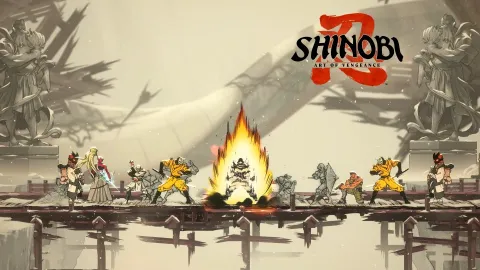
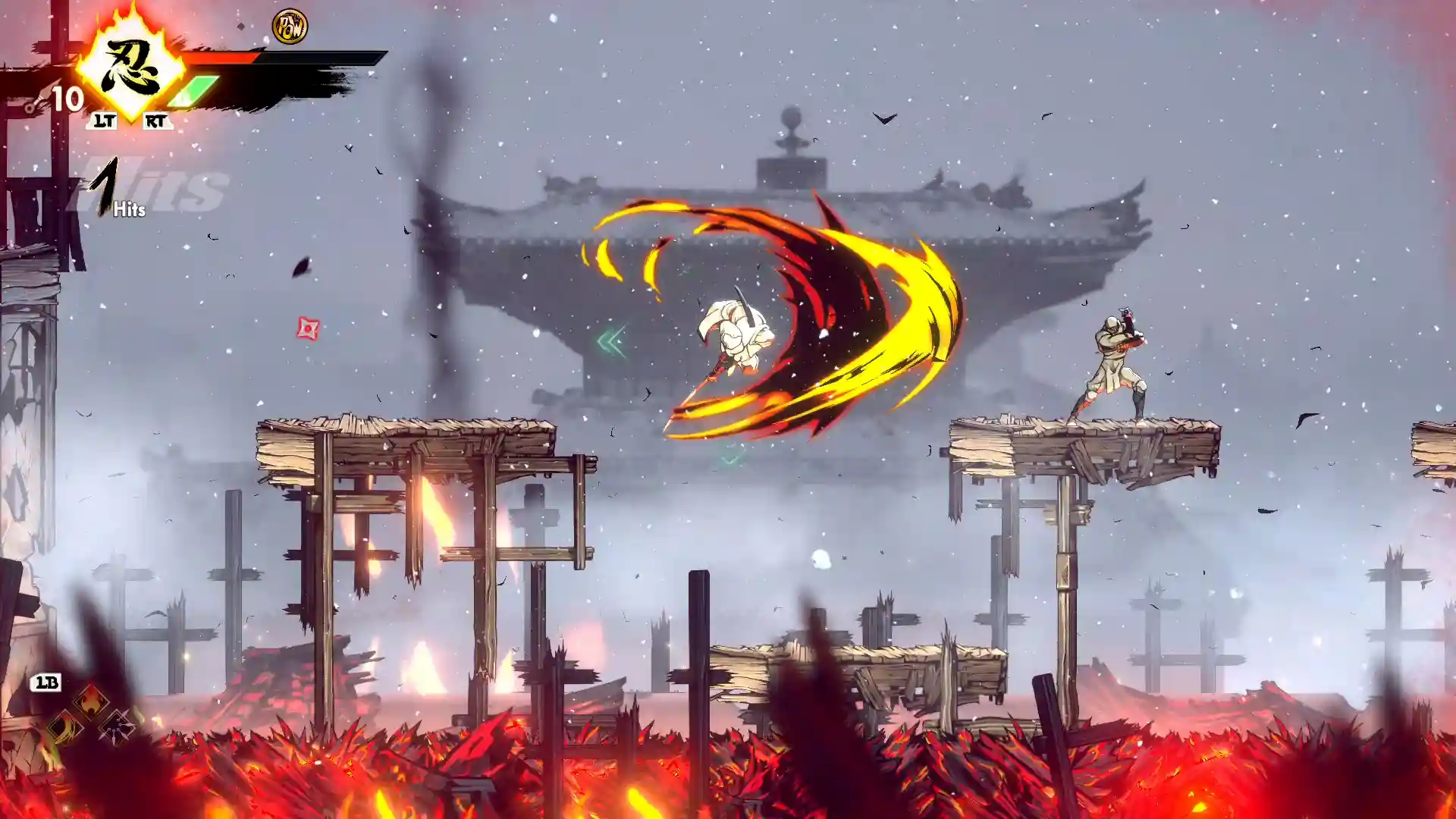
just beat Shinobi Art of Vengeance. Great game- in fact, as someone who loves doing ninja shit in games, I'd say this is the GOAT 2D ninja game. I like it better than Ninja Gaiden 4 TBH, and much more than Ninja Gaiden Ragebound.
Beating the game unlocks arcade mode- just went through the first level in about 12 minutes obliterating everything. That was really satisfying.
If anyone was ever on the fence about this game, DON'T BE
I played the Switch 2 version and it is gorgeous.

I've just finished playing American Arcadia, a platforming walking sim developed by Out of the Blue Games and published by Raw Fury. Completing the game to 100% achievement took seven hours, including a few scene replays.


American Arcadia is a retro-future utopia filled with talking robots, advanced automobiles, and a disco-era aesthetic. Of the twenty-three thousand residents who make up the city's population, Trevor Hills is a small-time account manager riding his desk job through an otherwise solitary life. However, Trevor's life of mundanity is shattered by the revelation that both the town and his life are all part of a decades-long reality television experiment. Worse still, Trevor's the least-viewed member of the unaware cast, meaning he's scheduled to be "retired" from the show. With the help of an outside activist, Angela Solano, Trevor sets out on the run of his life as he attempts to escape American Arcadia.


The narrative of American Arcadia was surprisingly enjoyable. The game establishes the dystopian city of American Arcadia as a sort of mutant hybrid between Disneyland and Westworld. Decades prior to the present events of the game, the city was founded as part of an idealistic utopia by the Waltons, a less-than-subtle stand-in for Walt Disney. The Walton Corporation now runs the city under legally gray provisions, which grant them near-complete control over the residents of American Arcadia, all of whom were born in the city under the false assumption that they're living in the early 1970s.
Trevor's introduction into the story was a nice exploration of solitary lifestyles and loneliness, establishing him as a likable dweeb. It's a starting point for the friendship between himself and Angela, the hacker activist trying to free Trevor from the city. A vast majority of the dialogue in the game is banter between Trevor and Angela. Their interactions are... not exactly bad, but often toeing the line with the kind of overly bubbly dialogue for which Marvel films are often critiqued. I felt similarly about their interactions with the supporting cast, which includes a delightfully intelligent villain, as well as a tropey pursuer who chases Trevor through most of the game. By the final act, I was able to come to terms with some of the cringe-adjacent dialogue by the supporting cast, rationalizing it as actually a smart narrative choice. However, I'm not able to fully forgive some of Trevor and Angela's lines using the same logic.
American Arcadia is a smart examination of the voyeuristically parasocial dynamic that has infected much of modern media. While I thought I'd understood the game's premise by the midpoint, I found myself pleasantly surprised by revelations in the final act. Unfortunately for American Arcadia, it is a rather long road to arrive at those endgame twists. To the game's credit, the early few scenes are strong openers that engage the player, but the mid-to-late segments dragged their feet before the final act. The game also does frequent mockumentary cutaways to Trevor and Angela recounting the events, which I sometimes found distracting.


The gameplay is split between Trevor and Angela. During the Trevor sections, he's largely restricted to walking across a 2-D plane, occasionally moving boxes, or jumping as platforming demands it. Often, Trevor will need to sneak past guards, which requires Angela to hack nearby devices. These devices are simply controlled, usually just moving back and forth to provide Trevor with cover or a point to climb. These Trevor sections are frequently visually striking, though occasionally boring due to their incredible simplicity. There's no technical or intellectual challenge of consequence while controlling Trevor, so most players will spend a lot of time just running to the right.
In some chapters, the player takes on Angela's role in the story, which is conveyed from a first-person perspective rather than Trevor's 2-D view. Angela's segments revolve around simple puzzles as she wanders around Walton HQ and her apartment. Similar to Trevor's segments, the puzzles that Angela must solve are trivial, meaning most players can finish them without any substantial hurdle.
Between the Trevor and Angela gameplay, the mechanical enjoyment of American Arcadia felt substantially overshadowed by its narrative. I found the art direction to vary between the mundane and the surprisingly beautiful; however, I did notice some minor visual artifacting and awkwardly timed renders.


While I would recommend American Arcadia to others, I think it's best suggested to those who have the patience to tolerate a walking sim, as the pacing dips into that bucket at times. I had a fun time with the game's final act, which I felt was a thoughtful criticism of the direction of media providers. If you're still thinking of picking this game up at full price, don't be a fool. Grab it on discount, because we all need a little escape now and again.
American Arcadia is a retro-future utopia filled with talking robots, advanced automobiles, and a disco-era aesthetic. Of the twenty-three thousand residents who make up the city's population, Trevor Hills is a small-time account manager riding his desk job through an otherwise solitary life. However, Trevor's life of mundanity is shattered by the revelation that both the town and his life are all part of a decades-long reality television experiment. Worse still, Trevor's the least-viewed member of the unaware cast, meaning he's scheduled to be "retired" from the show. With the help of an outside activist, Angela Solano, Trevor sets out on the run of his life as he attempts to escape American Arcadia.
The narrative of American Arcadia was surprisingly enjoyable. The game establishes the dystopian city of American Arcadia as a sort of mutant hybrid between Disneyland and Westworld. Decades prior to the present events of the game, the city was founded as part of an idealistic utopia by the Waltons, a less-than-subtle stand-in for Walt Disney. The Walton Corporation now runs the city under legally gray provisions, which grant them near-complete control over the residents of American Arcadia, all of whom were born in the city under the false assumption that they're living in the early 1970s.
Trevor's introduction into the story was a nice exploration of solitary lifestyles and loneliness, establishing him as a likable dweeb. It's a starting point for the friendship between himself and Angela, the hacker activist trying to free Trevor from the city. A vast majority of the dialogue in the game is banter between Trevor and Angela. Their interactions are... not exactly bad, but often toeing the line with the kind of overly bubbly dialogue for which Marvel films are often critiqued. I felt similarly about their interactions with the supporting cast, which includes a delightfully intelligent villain, as well as a tropey pursuer who chases Trevor through most of the game. By the final act, I was able to come to terms with some of the cringe-adjacent dialogue by the supporting cast, rationalizing it as actually a smart narrative choice. However, I'm not able to fully forgive some of Trevor and Angela's lines using the same logic.
American Arcadia is a smart examination of the voyeuristically parasocial dynamic that has infected much of modern media. While I thought I'd understood the game's premise by the midpoint, I found myself pleasantly surprised by revelations in the final act. Unfortunately for American Arcadia, it is a rather long road to arrive at those endgame twists. To the game's credit, the early few scenes are strong openers that engage the player, but the mid-to-late segments dragged their feet before the final act. The game also does frequent mockumentary cutaways to Trevor and Angela recounting the events, which I sometimes found distracting.
The gameplay is split between Trevor and Angela. During the Trevor sections, he's largely restricted to walking across a 2-D plane, occasionally moving boxes, or jumping as platforming demands it. Often, Trevor will need to sneak past guards, which requires Angela to hack nearby devices. These devices are simply controlled, usually just moving back and forth to provide Trevor with cover or a point to climb. These Trevor sections are frequently visually striking, though occasionally boring due to their incredible simplicity. There's no technical or intellectual challenge of consequence while controlling Trevor, so most players will spend a lot of time just running to the right.
In some chapters, the player takes on Angela's role in the story, which is conveyed from a first-person perspective rather than Trevor's 2-D view. Angela's segments revolve around simple puzzles as she wanders around Walton HQ and her apartment. Similar to Trevor's segments, the puzzles that Angela must solve are trivial, meaning most players can finish them without any substantial hurdle.
Between the Trevor and Angela gameplay, the mechanical enjoyment of American Arcadia felt substantially overshadowed by its narrative. I found the art direction to vary between the mundane and the surprisingly beautiful; however, I did notice some minor visual artifacting and awkwardly timed renders.
While I would recommend American Arcadia to others, I think it's best suggested to those who have the patience to tolerate a walking sim, as the pacing dips into that bucket at times. I had a fun time with the game's final act, which I felt was a thoughtful criticism of the direction of media providers. If you're still thinking of picking this game up at full price, don't be a fool. Grab it on discount, because we all need a little escape now and again.
GTA VI
About 6 to 7 hours in, a lot of RDR2 is in it, but I felt that was the way they would handle GTAVI as some of the features in RDR2, felt like evolutionary steps with Rockstar as a studio.
So your trunk of your car can now store guns, clothes (like mask to change how you look to avoid cops post YN activities lol) You are limited on the weapons you can carry at once, so selecting them out of your trunk is needed, long guns like rifles, shotguns etc now show in real time on you sorta like RDR2, which means NPCs behave differently around you if you are open carrying, so a handgun tucked makes sense for stealth like approach etc.
The stealing of cars is also more advanced, you have to do a small mini game to steal car and newer models require a method of unlocking the key to start the car (amazing touch btw)
The game is called GTA, so the focus returning to stealing cars in different ways, upgrading them etc is nice to see refocused.
The cars now take gas (which is wild for me to find out while I'm on a high speed chase after several murders lol) So you can run out of gas. The check engine light also goes on when your engine is almost fried.
The customizing of cars is far more advanced too, with almost every aspect of the car able to be modded, painted, customized etc
How you speak to people from RDR2, is now also how you speak to NPCs in GTAVI.
GTA SA features also make a return as well, you can work out gaining strength, like dead lift, bench, squat, kettle bells, punching bag etc. (I'm not sure if it changes anything on how the character looks like though, but a great return either way)
I'll confirm while playing if it changes how they look, if it does ,it means its a return to the GTASA feature
So I finished Castlevania Belmont's Curse.. loved it.
Since then I haven't been dedicated to playing a single game.
I have been bouncing around between
Starfox
Splatoon Raiders
TMNT Shredder's Revenge
Marvel Cosmic Invasion
Wolverine
Shinobi: Art of Vengeance
Prince of Persia: Lost Crown
All of these games have this "pick up and play for a little bit, then put down" playability feature: they aren't incredibly deep and they provide satisfying action in short spurts.
Might go back to Saros and add to the list, as that has been updated recently.
How'd it stack up to earlier games?So I finished Castlevania Belmont's Curse.. loved it.
If you're looking for a pure sequel to SOTN and the 2D GBA/DS games, you might be a little surprised, as there is quite a bit of platforming and puzzle solving in this one. Certain sections play more like Prince of Persia than Castlevania.How'd it stack up to earlier games?
That being said though, the combat is excellent- there are a lot of cool weapons and playstyles available. The arcana/magic is also quite impressive.
It's a little hard to compare it to previous entries because it has its own soul. As previously stated, I liked it a lot, but for people looking for pure action, they might be turned off by the platforming and pacing.
Prometheus
Veteran
Playing Control Resonant.
This game reminds me why I hate Unreal engine 5 so much. Shitfest performance in 99% of titles with shit image quality.
Conversely - 4K, RT on (DLSS), yet runs absolutely butter smooth. ZERO microstutter, hitching or framerate issues. Image quality looks fantastic. No aliasing or shimmering in motion. Visuals and art direction are a delight.
The story and world building is interesting. The gameplay and combat is better than I expected. Whilst the combat is not super in-depth reminds me of DMC particularly with the air combos.
Remedy do not miss.
I've just finished playing Rubinite, a boss-battle-focused action game developed and published by Cup Dog Games in collaboration with GameWorks Ventures. Completing 100% of the achievements took 12 hours; however, skill is a major barrier to progression, so the average playtime could be longer or shorter depending on the player.


The centuries-long reign of the Scarlet Kingdom was brought to a close at the hands of The Witch of Illusions. After discovering that the Purebloods of the kingdom possess a magical property within their crimson eyes, The Witch commits mass genocide to harvest eyes and mutate bodies into monstrous Bloodstained. Witnessing the mass murder, Crown Princess Ruby Scarlet flees into a forest, where she's saved by a Bloodstained hunter, Roy. Under Roy's tutelage, Ruby learns to fight, and the pair carve a path of vengeance to The Witch.


Ruby and Roy establish a home base in an abandoned monastery, far from the Scarlet Kingdom's capital. They're accompanied by a lively lizardfolk craftsman, Wichiwi, whose positivity is a nice balance to Roy's brooding nature. As the three defeat Bloodstained, illusionary magic around the monastery weakens, allowing Ruby and Wichiwi to explore deeper into the monastery. While Rubinite initially presents itself as a straightforward revenge narrative, it quickly becomes apparent that illusions are a major facet of the story.
Hidden around the monastery are memories from the past, which serve as the main vehicle for conveying the plot outside of character dialogue. Eventually, it becomes clear that the monastery was not only the origin of a terrible tragedy, but also intimately linked to The Witch. I enjoyed the mystery of Rubinite, which is pleasantly cryptic in its use of dialogue-free flashbacks to the past. The characters are charming given the game's short length, motivating me to follow their stories through to the very end.
Rubinite is an exploration of the thin veil between reality and illusion. It asks at what point the lies we tell ourselves become our own truths. Supporting this profundity is an often spectacular art direction. Every fight is beautifully choreographed, including bloody final executions, with some impressive animations given the small development team. The music is subtle but pleasant, which is exactly what I wanted given my numerous boss attempts.
Toward the last third of the game, it takes a pretty big narrative swing. For the most part, it stuck the landing, but bloated the storyline, introducing a lot of repetitive content into what felt like a streamlined journey. While I never felt bored in the final act, I could anticipate this section of the game bothering players who dislike repetition.


Rubinite's gameplay feels unique compared to other action games. On its surface, it bears a lot of similarities to a soulslike, emphasizing the importance of dodging, as well as an accompanying health flask. However, these features are ultimately training wheels of sorts for the late game, which demands substantial mastery of reading bosses and Ruby's mechanics.
Ruby has a few abilities: she can slash, counter grabs, and throw projectiles. These attacks deal relatively little damage to the Bloodstained, who have a supernaturally high constitution. Thankfully, as a Pureblood, Ruby's scarlet eyes allow her to focus on magical crystals embedded in the Bloodstained. By locking onto a Bloodstained and focusing, Ruby stacks up a "mark" on which she can execute a strike for massive damage. The gameplay somewhat defied my expectations, as I'd assumed Ruby would be a very fast, roguish type. While it's true that some bosses demand a certain degree of movement, in most scenarios Ruby plays like a stationary tank, charging up a massively high-damage strike during a boss opening and otherwise perfect-dodging while focusing.
Ruby utilizes a few different types of strikes, but she can usually only have one active per battle. One allows her to power up her normal slash attacks after landing, another plants small bombs on enemies, and the final one enhances her ranged attacks. These various strike types are a nice way to let players tailor Ruby to their preferred playstyles. Ruby can also equip a variety of talismans that augment her abilities. The talismans have a wide range of effects, with some enhancing her basic damage, while others grant passive boons like automatic damage or special effects during perfect dodges. Several talismans nicely complement the strikes, allowing players to assemble a "build" of sorts for Ruby. One point of criticism would be that not all talismans felt equally useful, with several having no functional purpose in the final part of the game.


I would recommend Rubinite to others, with a strong caveat that it's best for masochists like myself. It's far from the hardest game I've played, but the nature of the final parts of the game allows for very few mistakes. As there's no method of strengthening Ruby, the only way to progress the story is by getting good. Thus, players who are averse to difficulty may want to avoid this one. For the masochists, Rubinite delivers a beautiful boss-rush experience. It's a journey you'll want to play through to the end, even when the bosses have you seeing red.
The centuries-long reign of the Scarlet Kingdom was brought to a close at the hands of The Witch of Illusions. After discovering that the Purebloods of the kingdom possess a magical property within their crimson eyes, The Witch commits mass genocide to harvest eyes and mutate bodies into monstrous Bloodstained. Witnessing the mass murder, Crown Princess Ruby Scarlet flees into a forest, where she's saved by a Bloodstained hunter, Roy. Under Roy's tutelage, Ruby learns to fight, and the pair carve a path of vengeance to The Witch.
Ruby and Roy establish a home base in an abandoned monastery, far from the Scarlet Kingdom's capital. They're accompanied by a lively lizardfolk craftsman, Wichiwi, whose positivity is a nice balance to Roy's brooding nature. As the three defeat Bloodstained, illusionary magic around the monastery weakens, allowing Ruby and Wichiwi to explore deeper into the monastery. While Rubinite initially presents itself as a straightforward revenge narrative, it quickly becomes apparent that illusions are a major facet of the story.
Hidden around the monastery are memories from the past, which serve as the main vehicle for conveying the plot outside of character dialogue. Eventually, it becomes clear that the monastery was not only the origin of a terrible tragedy, but also intimately linked to The Witch. I enjoyed the mystery of Rubinite, which is pleasantly cryptic in its use of dialogue-free flashbacks to the past. The characters are charming given the game's short length, motivating me to follow their stories through to the very end.
Rubinite is an exploration of the thin veil between reality and illusion. It asks at what point the lies we tell ourselves become our own truths. Supporting this profundity is an often spectacular art direction. Every fight is beautifully choreographed, including bloody final executions, with some impressive animations given the small development team. The music is subtle but pleasant, which is exactly what I wanted given my numerous boss attempts.
Toward the last third of the game, it takes a pretty big narrative swing. For the most part, it stuck the landing, but bloated the storyline, introducing a lot of repetitive content into what felt like a streamlined journey. While I never felt bored in the final act, I could anticipate this section of the game bothering players who dislike repetition.
Rubinite's gameplay feels unique compared to other action games. On its surface, it bears a lot of similarities to a soulslike, emphasizing the importance of dodging, as well as an accompanying health flask. However, these features are ultimately training wheels of sorts for the late game, which demands substantial mastery of reading bosses and Ruby's mechanics.
Ruby has a few abilities: she can slash, counter grabs, and throw projectiles. These attacks deal relatively little damage to the Bloodstained, who have a supernaturally high constitution. Thankfully, as a Pureblood, Ruby's scarlet eyes allow her to focus on magical crystals embedded in the Bloodstained. By locking onto a Bloodstained and focusing, Ruby stacks up a "mark" on which she can execute a strike for massive damage. The gameplay somewhat defied my expectations, as I'd assumed Ruby would be a very fast, roguish type. While it's true that some bosses demand a certain degree of movement, in most scenarios Ruby plays like a stationary tank, charging up a massively high-damage strike during a boss opening and otherwise perfect-dodging while focusing.
Ruby utilizes a few different types of strikes, but she can usually only have one active per battle. One allows her to power up her normal slash attacks after landing, another plants small bombs on enemies, and the final one enhances her ranged attacks. These various strike types are a nice way to let players tailor Ruby to their preferred playstyles. Ruby can also equip a variety of talismans that augment her abilities. The talismans have a wide range of effects, with some enhancing her basic damage, while others grant passive boons like automatic damage or special effects during perfect dodges. Several talismans nicely complement the strikes, allowing players to assemble a "build" of sorts for Ruby. One point of criticism would be that not all talismans felt equally useful, with several having no functional purpose in the final part of the game.
I would recommend Rubinite to others, with a strong caveat that it's best for masochists like myself. It's far from the hardest game I've played, but the nature of the final parts of the game allows for very few mistakes. As there's no method of strengthening Ruby, the only way to progress the story is by getting good. Thus, players who are averse to difficulty may want to avoid this one. For the masochists, Rubinite delivers a beautiful boss-rush experience. It's a journey you'll want to play through to the end, even when the bosses have you seeing red.
Prometheus
Veteran
I don't know if I'm getting older but I find myself getting bored from games quite quickly.
If it takes more than 20 hours to complete I've had enough.
Younger me would have played Phantom Blade Zero twice. Now I can't wait to finish this game so I can move on to my next game!
If it takes more than 20 hours to complete I've had enough.
Younger me would have played Phantom Blade Zero twice. Now I can't wait to finish this game so I can move on to my next game!
I don't know if I'm getting older but I find myself getting bored from games quite quickly.
If it takes more than 20 hours to complete I've had enough.
Younger me would have played Phantom Blade Zero twice. Now I can't wait to finish this game so I can move on to my next game!
20 hours is a sweet spot. The open-world and sandbox era ballooned a lot of genres IMO.
Online games offer variety for me. I can play for 20 mins or 20 hours. Needs the be the rpg kind tho.
Tbh I wish there were more 8hr fps campaigns not friggin cod. Want more? Replay it on harder difficulties. Unfortunate I had to play crysis trilogy to get that recently.
Even doom is a bit exhausting. You can’t step away from it and just come back. I’m gonna have to completely restart Eternal
Prometheus
Veteran
Doom 2016 and Eternal has the best pacing of any FPS game I've played. I replay both games every so often because they're so damn fun on Nightmare. Never gets boring.20 hours is a sweet spot. The open-world and sandbox era ballooned a lot of genres IMO.
Online games offer variety for me. I can play for 20 mins or 20 hours. Needs the be the rpg kind tho.
Tbh I wish there were more 8hr fps campaigns not friggin cod. Want more? Replay it on harder difficulties. Unfortunate I had to play crysis trilogy to get that recently.
Even doom is a bit exhausting. You can’t step away from it and just come back. I’m gonna have to completely restart Eternal
I hate long open world games. They're so repetitive.
I'm with you. The challenge rooms, mods, etc make those games very replayable. Plus there are arcade modes where you can post your high scores and stuff.Doom 2016 and Eternal has the best pacing of any FPS game I've played. I replay both games every so often because they're so damn fun on Nightmare. Never gets boring.
I hate long open world games. They're so repetitive.
Old school fun, updated for a modern audience. There should be more games like that, IMO.
Starfox remake on Switch 2 scratches that itch as well, btw. Get in, blow some shit up, try to do better next time. SIMPLE.
I'm getting Watership Down vibes from this...I've just finished playing Rubinite, a boss-battle-focused action game developed and published by Cup Dog Games in collaboration with GameWorks Ventures. Completing 100% of the achievements took 12 hours; however, skill is a major barrier to progression, so the average playtime could be longer or shorter depending on the player.
The centuries-long reign of the Scarlet Kingdom was brought to a close at the hands of The Witch of Illusions. After discovering that the Purebloods of the kingdom possess a magical property within their crimson eyes, The Witch commits mass genocide to harvest eyes and mutate bodies into monstrous Bloodstained. Witnessing the mass murder, Crown Princess Ruby Scarlet flees into a forest, where she's saved by a Bloodstained hunter, Roy. Under Roy's tutelage, Ruby learns to fight, and the pair carve a path of vengeance to The Witch.
Ruby and Roy establish a home base in an abandoned monastery, far from the Scarlet Kingdom's capital. They're accompanied by a lively lizardfolk craftsman, Wichiwi, whose positivity is a nice balance to Roy's brooding nature. As the three defeat Bloodstained, illusionary magic around the monastery weakens, allowing Ruby and Wichiwi to explore deeper into the monastery. While Rubinite initially presents itself as a straightforward revenge narrative, it quickly becomes apparent that illusions are a major facet of the story.
Hidden around the monastery are memories from the past, which serve as the main vehicle for conveying the plot outside of character dialogue. Eventually, it becomes clear that the monastery was not only the origin of a terrible tragedy, but also intimately linked to The Witch. I enjoyed the mystery of Rubinite, which is pleasantly cryptic in its use of dialogue-free flashbacks to the past. The characters are charming given the game's short length, motivating me to follow their stories through to the very end.
Rubinite is an exploration of the thin veil between reality and illusion. It asks at what point the lies we tell ourselves become our own truths. Supporting this profundity is an often spectacular art direction. Every fight is beautifully choreographed, including bloody final executions, with some impressive animations given the small development team. The music is subtle but pleasant, which is exactly what I wanted given my numerous boss attempts.
Toward the last third of the game, it takes a pretty big narrative swing. For the most part, it stuck the landing, but bloated the storyline, introducing a lot of repetitive content into what felt like a streamlined journey. While I never felt bored in the final act, I could anticipate this section of the game bothering players who dislike repetition.
Rubinite's gameplay feels unique compared to other action games. On its surface, it bears a lot of similarities to a soulslike, emphasizing the importance of dodging, as well as an accompanying health flask. However, these features are ultimately training wheels of sorts for the late game, which demands substantial mastery of reading bosses and Ruby's mechanics.
Ruby has a few abilities: she can slash, counter grabs, and throw projectiles. These attacks deal relatively little damage to the Bloodstained, who have a supernaturally high constitution. Thankfully, as a Pureblood, Ruby's scarlet eyes allow her to focus on magical crystals embedded in the Bloodstained. By locking onto a Bloodstained and focusing, Ruby stacks up a "mark" on which she can execute a strike for massive damage. The gameplay somewhat defied my expectations, as I'd assumed Ruby would be a very fast, roguish type. While it's true that some bosses demand a certain degree of movement, in most scenarios Ruby plays like a stationary tank, charging up a massively high-damage strike during a boss opening and otherwise perfect-dodging while focusing.
Ruby utilizes a few different types of strikes, but she can usually only have one active per battle. One allows her to power up her normal slash attacks after landing, another plants small bombs on enemies, and the final one enhances her ranged attacks. These various strike types are a nice way to let players tailor Ruby to their preferred playstyles. Ruby can also equip a variety of talismans that augment her abilities. The talismans have a wide range of effects, with some enhancing her basic damage, while others grant passive boons like automatic damage or special effects during perfect dodges. Several talismans nicely complement the strikes, allowing players to assemble a "build" of sorts for Ruby. One point of criticism would be that not all talismans felt equally useful, with several having no functional purpose in the final part of the game.
I would recommend Rubinite to others, with a strong caveat that it's best for masochists like myself. It's far from the hardest game I've played, but the nature of the final parts of the game allows for very few mistakes. As there's no method of strengthening Ruby, the only way to progress the story is by getting good. Thus, players who are averse to difficulty may want to avoid this one. For the masochists, Rubinite delivers a beautiful boss-rush experience. It's a journey you'll want to play through to the end, even when the bosses have you seeing red.
Prometheus
Veteran
100%. I also like how Resident Evil games take 10-16 hours on a first playthrough, but a subsequent playthrough can be blasted in 3-4 hours.I'm with you. The challenge rooms, mods, etc make those games very replayable. Plus there are arcade modes where you can post your high scores and stuff.
Old school fun, updated for a modern audience. There should be more games like that, IMO.
Starfox remake on Switch 2 scratches that itch as well, btw. Get in, blow some shit up, try to do better next time. SIMPLE.
On Steam it says I've played Phantom Blade Zero for 24 hours (I really wish Steam would only count in game time and not menus).
In game counter 13 hours.
It feels like I've been playing this game for weeks and I'm not even 1/3rd through.
Devs... stop making long games!
Right. Ever try Nier Automata? That game started off with a bang.. with different playstyles, a 2D mode, an interesting boss fight.100%. I also like how Resident Evil games take 10-16 hours on a first playthrough, but a subsequent playthrough can be blasted in 3-4 hours.
On Steam it says I've played Phantom Blade Zero for 24 hours (I really wish Steam would only count in game time and not menus).
In game counter 13 hours.
It feels like I've been playing this game for weeks and I'm not even 1/3rd through.
Devs... stop making long games!
Then you land on a planet and it goes all open world RPG on you. At that point I didn't care anymore. I still haven't finished it.
Lol. Yes, just like Watership Down.I'm getting Watership Down vibes from this...
I've just finished playing Scarecrow: 90's Crime Story, a narrative-driven top-down shooter developed by ChillouT Studio and published by Stellar Stag. Completing all the achievements took slightly under eight hours, necessitated by the fact that it requires three playthroughs to witness alternate endings. A standard playthrough is probably around three to four hours.


Despite the game's titular misnomer, Scarecrow: 90's Crime Story is set around the turn of the millennium, following brothers-in-arms Robert and Dima throughout the first few years of the 2000s. While never explained, their world is populated by a mixture of humans and anthropomorphized animals who live together as equals in society. After fighting in the Soviet–Afghan War, Robert and Dima return home to a small city outside of Moscow, where they're welcomed by general disdain. Unable to find stable employment, the two become hitmen for hire, reporting to a local fixer, Viktor. Robert and Dima struggle to maintain some semblance of normalcy during their daily lives, but every night their jobs call them back into a life of crime.


Scarecrow: 90's Crime Story focuses on the premise of moving on from the past. Not only is it the cue at the end of each level to progress the gameplay, but it is also a challenge directed squarely at the game's protagonist, Robert. While he's made a name for himself as an underground hitman, Robert does not relish the act of killing for money. During the daytime, Robert spends his time helping the residents of the town and relaxing at the local bar. The town, Severodvishchensk, is stuck firmly in a post-Soviet era depression. Many of its residents live there not out of choice, but due to an inability to afford anywhere else. The town's only thriving industry is crime, with most of the police force having been fully paid off by local gangs.
The largest local gang is The Wolves, whom Dima and Robert cross paths with after a job goes wrong. In retaliation, The Wolves begin lashing out with increasing violence, making it harder for Robert to sustain his dual identity as a friendly neighbor and a brutal hitman. It's an interesting premise, whose stakes get raised with the introduction of Robert's love interest, Sasha. Due to Sasha's detestation of violence, Robert feels increasingly conflicted about his nighttime activities.
The game features a small cast of supporting characters, a few of whom request Robert's assistance with minor tasks around town. Whether or not Robert helps the townsfolk not only influences the ending, but also reveals more about each of their pasts. The central theme behind most characters is that they're living in Severodvishchensk to avoid their pasts. The "good" paths for most characters involve helping them move on from the town and their own personal purgatories. The protagonists, Robert and Dima, are no exception, with the game focusing a lot of time on the pair's PTSD, from which they never recovered after the war. While the narrative felt a bit slow for my tastes at times, I appreciated the game's commitment to an exploration of moving on from past trauma.


Each night, Dima and Robert are sent out on missions to clear out local gang hideouts. The core gameplay is that of a top-down shooter, which rewards the player for hastily clearing out all enemies on the floor and grades performance at the end of each mission. The player alternates between Robert and Dima between missions, each of whom plays slightly differently. Robert's playstyle is the most interesting, as he has a limited amount of ammunition and a dash ability. Using these together, he clears most missions by avoiding gunfire, throwing his empty weapons at enemies, and swapping out weapons on the fly. On the other hand, Dima cannot dash or swap weapons, but he has a near-infinite supply of ammo. My general opinion was that Dima could've been cut from this game entirely, and the overall gameplay experience would've benefited from it.
Enemies tend to play very aggressively, particularly on the higher difficulty settings. Many will instantly lock on during combat, allowing them to deal out damage very quickly. Sometimes combat bordered on what I would consider "unfair" territory, with enemies perfectly targeting the player character from offscreen. Despite this, Scarecrow: 90's Crime Story is very easy. Even playing on Hard, players will likely ace levels unintentionally. They're also relatively short, with most missions lasting no more than 5 to 10 minutes in length.
Thus, the majority of Scarecrow: 90's Crime Story is actually a narrative adventure, with a most of the playtime spent wandering around Severodvishchensk as Robert. Unfortunately, this was also the weaker aspect of the game, with side character interactions being limited to simple "Help" or "Refuse" prompts paired with basic fetch quests. The town is laid out in a 2D side-scroller fashion, with several buildings that Robert can enter. I think the game would've benefited from a fast-travel option or by reducing how many screens of the town are explorable. Several screens are utilized only once narratively and then remain empty for the remainder of the game. Despite having nothing further to contribute to the story, Robert has to run through these areas repeatedly to get from one key area of the town to another. It really slows down the pacing of the narrative and should've been trimmed down or reworked.


I enjoyed my experience with Scarecrow: 90's Crime Story, but walked away with negative feelings about some of its design decisions. The emphasis of this game is really on the narrative, with surprisingly little time spent playing a top-down shooter. For context, there are ten missions, including the prologue, most of which have fewer than four sections. It was a fun experience, but much like Robert, I'm relieved to move on.
Despite the game's titular misnomer, Scarecrow: 90's Crime Story is set around the turn of the millennium, following brothers-in-arms Robert and Dima throughout the first few years of the 2000s. While never explained, their world is populated by a mixture of humans and anthropomorphized animals who live together as equals in society. After fighting in the Soviet–Afghan War, Robert and Dima return home to a small city outside of Moscow, where they're welcomed by general disdain. Unable to find stable employment, the two become hitmen for hire, reporting to a local fixer, Viktor. Robert and Dima struggle to maintain some semblance of normalcy during their daily lives, but every night their jobs call them back into a life of crime.
Scarecrow: 90's Crime Story focuses on the premise of moving on from the past. Not only is it the cue at the end of each level to progress the gameplay, but it is also a challenge directed squarely at the game's protagonist, Robert. While he's made a name for himself as an underground hitman, Robert does not relish the act of killing for money. During the daytime, Robert spends his time helping the residents of the town and relaxing at the local bar. The town, Severodvishchensk, is stuck firmly in a post-Soviet era depression. Many of its residents live there not out of choice, but due to an inability to afford anywhere else. The town's only thriving industry is crime, with most of the police force having been fully paid off by local gangs.
The largest local gang is The Wolves, whom Dima and Robert cross paths with after a job goes wrong. In retaliation, The Wolves begin lashing out with increasing violence, making it harder for Robert to sustain his dual identity as a friendly neighbor and a brutal hitman. It's an interesting premise, whose stakes get raised with the introduction of Robert's love interest, Sasha. Due to Sasha's detestation of violence, Robert feels increasingly conflicted about his nighttime activities.
The game features a small cast of supporting characters, a few of whom request Robert's assistance with minor tasks around town. Whether or not Robert helps the townsfolk not only influences the ending, but also reveals more about each of their pasts. The central theme behind most characters is that they're living in Severodvishchensk to avoid their pasts. The "good" paths for most characters involve helping them move on from the town and their own personal purgatories. The protagonists, Robert and Dima, are no exception, with the game focusing a lot of time on the pair's PTSD, from which they never recovered after the war. While the narrative felt a bit slow for my tastes at times, I appreciated the game's commitment to an exploration of moving on from past trauma.
Each night, Dima and Robert are sent out on missions to clear out local gang hideouts. The core gameplay is that of a top-down shooter, which rewards the player for hastily clearing out all enemies on the floor and grades performance at the end of each mission. The player alternates between Robert and Dima between missions, each of whom plays slightly differently. Robert's playstyle is the most interesting, as he has a limited amount of ammunition and a dash ability. Using these together, he clears most missions by avoiding gunfire, throwing his empty weapons at enemies, and swapping out weapons on the fly. On the other hand, Dima cannot dash or swap weapons, but he has a near-infinite supply of ammo. My general opinion was that Dima could've been cut from this game entirely, and the overall gameplay experience would've benefited from it.
Enemies tend to play very aggressively, particularly on the higher difficulty settings. Many will instantly lock on during combat, allowing them to deal out damage very quickly. Sometimes combat bordered on what I would consider "unfair" territory, with enemies perfectly targeting the player character from offscreen. Despite this, Scarecrow: 90's Crime Story is very easy. Even playing on Hard, players will likely ace levels unintentionally. They're also relatively short, with most missions lasting no more than 5 to 10 minutes in length.
Thus, the majority of Scarecrow: 90's Crime Story is actually a narrative adventure, with a most of the playtime spent wandering around Severodvishchensk as Robert. Unfortunately, this was also the weaker aspect of the game, with side character interactions being limited to simple "Help" or "Refuse" prompts paired with basic fetch quests. The town is laid out in a 2D side-scroller fashion, with several buildings that Robert can enter. I think the game would've benefited from a fast-travel option or by reducing how many screens of the town are explorable. Several screens are utilized only once narratively and then remain empty for the remainder of the game. Despite having nothing further to contribute to the story, Robert has to run through these areas repeatedly to get from one key area of the town to another. It really slows down the pacing of the narrative and should've been trimmed down or reworked.
I enjoyed my experience with Scarecrow: 90's Crime Story, but walked away with negative feelings about some of its design decisions. The emphasis of this game is really on the narrative, with surprisingly little time spent playing a top-down shooter. For context, there are ten missions, including the prologue, most of which have fewer than four sections. It was a fun experience, but much like Robert, I'm relieved to move on.
I mean that in the sense it looks bright and cartoony but is actually quite dark..Lol. Yes, just like Watership Down.
just beat Shinobi Art of Vengeance. Great game- in fact, as someone who loves doing ninja shit in games, I'd say this is the GOAT 2D ninja game. I like it better than Ninja Gaiden 4 TBH, and much more than Ninja Gaiden Ragebound.
Beating the game unlocks arcade mode- just went through the first level in about 12 minutes obliterating everything. That was really satisfying.
If anyone was ever on the fence about this game, DON'T BE
I played the Switch 2 version and it is gorgeous.
I've just finished playing Adorable Adventures, a casual exploration game developed by Wild Sheep Studio and published by PQube. Completing the game with 100% of the achievements took around 3.5 hours, though I could foresee someone beating it during a normal playthrough within about two hours.


Set in a mountainous nature preserve, Adorable Adventures follows the story of Boris the Boar, who awakens one day to find his family missing. When he discovers his mother is trapped within a shed, Boris must gather the strength of all his siblings to free her. Unfortunately for Boris, his siblings are scattered all around the preserve, meaning he'll need to sniff them out and rally them to his cause. Boris's mission is urgent... but one can't blame a boar if he gets a little distracted along the way.


Adorable Adventures has a straightforward narrative established from the beginning of the game: gather Boris's siblings and free their mother. As Boris travels around the preserve, his adventure is narrated by a ranger whose job is monitoring local wildlife. It comes across as a cutesy nature documentary, with the narrator inferring Boris's thoughts as well as the personalities of his siblings. While I did find the narration to be a bit overly enthusiastic at times, I appreciated that the game was not just Boris running around to the same musical backdrop the entire time.
As one might expect from this sort of nature-focused game, the only real conflicts presented in the story are the aftermath of a recent wildfire and some trash scattered around the preserve. Both serve as a concerned nod to humanity's impact on the environment, yet they are delivered in a lighthearted enough tone so as not to detract from the game's upbeat setting.
The preserve is a pretty location that is fun to run around and explore. The visual fidelity, however, is a rather mixed experience, with some questionable texture resolutions across several vistas. It's not something you notice often while sticking to the main explorable environment, but some of the distant art assets felt like they could've used a bit more polish. On the subject of exploration, Boris's adventure is accompanied by a soundtrack that admittedly got rather grating after the second hour due to its repetitive loop.


Surely, Adorable Adventures will be the most iconic scent-trail-based video game of 2026. The entire gameplay loop revolves around Boris's keen nose, which he uses to tap into the "Scent-o-meter," a method of isolating specific smells. Because his sense of smell is so sharp, he picks up every scent across the map, localized by whatever is nearest to him. As he wanders around, the scent he detects changes rapidly based on proximity. This makes it difficult for Boris to lock onto his siblings. Thankfully, when Boris identifies the source of a particular smell enough times, he learns it by heart and can filter it out of his trails. Thus, the game's core loop involves discovering the sources of various flowers and mushrooms across each location and eliminating those that are irrelevant to his journey.
Nearly all of the game's achievements are tied to optional side tasks that Boris can engage in along the way. There are a few recurring varieties, including time trials, photo puzzles, and flower arrangements. During the time trials, Boris sprints through predefined courses, which prove to be fairly enjoyable because he slides around like a drifting sports car at max speed. I found the photo puzzles to be a bit too finicky; the solutions were immediately apparent, yet they required picking up and placing the nature camera repeatedly to solve.
When Boris encounters his siblings, most have simple tasks for him, usually some variation of a fetch quest. In addition to tracking flowers and mushrooms, Boris can also pick them up. This is the main mechanic not only behind solving the sibling quests, but also for several side activities around the map, such as collecting and arranging flowers at the nature station.


I would recommend Adorable Adventures, with the caveat that it's probably best experienced at a discount. I appreciate that the game does not overstay its welcome, though it's also not particularly rich with content or narrative. Still, it gave me a few smiles along the way, particularly when playing Boris as a destructive force of nature. Adorable Adventures caught the scent of fun and won't easily boar you before the credits roll.
Set in a mountainous nature preserve, Adorable Adventures follows the story of Boris the Boar, who awakens one day to find his family missing. When he discovers his mother is trapped within a shed, Boris must gather the strength of all his siblings to free her. Unfortunately for Boris, his siblings are scattered all around the preserve, meaning he'll need to sniff them out and rally them to his cause. Boris's mission is urgent... but one can't blame a boar if he gets a little distracted along the way.
Adorable Adventures has a straightforward narrative established from the beginning of the game: gather Boris's siblings and free their mother. As Boris travels around the preserve, his adventure is narrated by a ranger whose job is monitoring local wildlife. It comes across as a cutesy nature documentary, with the narrator inferring Boris's thoughts as well as the personalities of his siblings. While I did find the narration to be a bit overly enthusiastic at times, I appreciated that the game was not just Boris running around to the same musical backdrop the entire time.
As one might expect from this sort of nature-focused game, the only real conflicts presented in the story are the aftermath of a recent wildfire and some trash scattered around the preserve. Both serve as a concerned nod to humanity's impact on the environment, yet they are delivered in a lighthearted enough tone so as not to detract from the game's upbeat setting.
The preserve is a pretty location that is fun to run around and explore. The visual fidelity, however, is a rather mixed experience, with some questionable texture resolutions across several vistas. It's not something you notice often while sticking to the main explorable environment, but some of the distant art assets felt like they could've used a bit more polish. On the subject of exploration, Boris's adventure is accompanied by a soundtrack that admittedly got rather grating after the second hour due to its repetitive loop.
Surely, Adorable Adventures will be the most iconic scent-trail-based video game of 2026. The entire gameplay loop revolves around Boris's keen nose, which he uses to tap into the "Scent-o-meter," a method of isolating specific smells. Because his sense of smell is so sharp, he picks up every scent across the map, localized by whatever is nearest to him. As he wanders around, the scent he detects changes rapidly based on proximity. This makes it difficult for Boris to lock onto his siblings. Thankfully, when Boris identifies the source of a particular smell enough times, he learns it by heart and can filter it out of his trails. Thus, the game's core loop involves discovering the sources of various flowers and mushrooms across each location and eliminating those that are irrelevant to his journey.
Nearly all of the game's achievements are tied to optional side tasks that Boris can engage in along the way. There are a few recurring varieties, including time trials, photo puzzles, and flower arrangements. During the time trials, Boris sprints through predefined courses, which prove to be fairly enjoyable because he slides around like a drifting sports car at max speed. I found the photo puzzles to be a bit too finicky; the solutions were immediately apparent, yet they required picking up and placing the nature camera repeatedly to solve.
When Boris encounters his siblings, most have simple tasks for him, usually some variation of a fetch quest. In addition to tracking flowers and mushrooms, Boris can also pick them up. This is the main mechanic not only behind solving the sibling quests, but also for several side activities around the map, such as collecting and arranging flowers at the nature station.
I would recommend Adorable Adventures, with the caveat that it's probably best experienced at a discount. I appreciate that the game does not overstay its welcome, though it's also not particularly rich with content or narrative. Still, it gave me a few smiles along the way, particularly when playing Boris as a destructive force of nature. Adorable Adventures caught the scent of fun and won't easily boar you before the credits roll.